Masonic Articles and Essays
Civic Virtue and Freemasonry
Date Published:
9/4/2026
Civic virtue gives moral form to the life of a community. Through justice, prudence, temperance, fortitude, tolerance, and active participation, Freemasonry teaches that the virtues cultivated within the individual must also find expression in the Lodge, the civic body, and humanity at large. What does it mean for a Mason to practice virtue within the life of the community?
Like humans, groups and their egregore possess virtues. These virtues, while not as easily identified as those within individuals, often reflect regional or cultural influences more than classical structures. For example, when speaking of the United States, it is challenging to define consistent virtues. We must elevate our vision to loftier heights to both perceive and articulate them.
Civic virtue is the idea that citizens should prioritize the needs of their community over their own desires. It is a philosophical concept closely linked to citizenship and essential for the success of a society (Wikipedia). Let us delve deeper into civic virtue and what it means to be virtuous in this context.
Some would identify civic virtue as:
- Voting: Participating actively in elections.
- Community Participation: Engaging fully in one’s community.
- Temperance: Limiting behavior and respecting the rule of law.
- Fortitude: Standing against corrupt or unconstitutional government actions.
- Prudence: Exercising deliberation and reflection in decision-making.
- Justice: Upholding community-wide standards for human rights and equality.
- These actions demonstrate a commitment to the collective good over individual gain.
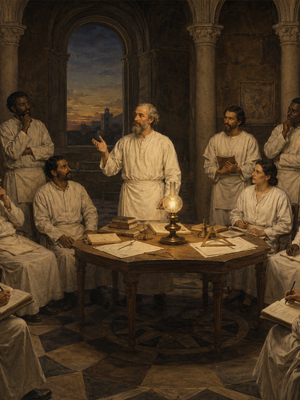 To any Freemason, civic virtue aligns seamlessly with Masonic ideals. Many of the virtues that constitute civic virtue—prudence, temperance, justice, and fortitude— are foundational to Freemasonry. These virtues transcend individual morality, concerning themselves with the broader welfare of society and the collective soul of humanity.
While personal virtues like honesty govern individual conduct, civic virtues such as justice operate within the group or societal framework. This distinction underscores the interconnectedness of the individual and the collective—an interdependence deeply rooted in Masonic philosophy.
"The Founding Fathers of the United States believed that civic virtue was essential to upholding the American republic. They recognized that the system depended on these values and that all citizens, not just elected representatives, needed to exercise civic virtue" (The American Revolution Institute).
Freemasonry’s survival and efficacy likewise depend on the practice of civic virtue. Freemasons are called to vote, participate, and contribute their insights to the Lodge and the Order. These actions form the heart of Freemasonry’s egregore—the collective consciousness of its members—and ensure the perpetuation of its values.
In Universal Freemasonry, civic virtue is enshrined in its Landmarks and philosophy. The Order emphasizes equality across genders, races, creeds, and religions, creating a unique ethos that reflects both the organization and its members. When Freemasons address each other as "Brother," they affirm a universal kinship that transcends divisions. Each member’s unique perspective enriches the Order, infusing it with diversity and depth.
Our Masonic system emphasizes tolerance as a cornerstone of civic virtue. Why tolerance? Because in a civically virtuous society, every voice holds value, even those with which we disagree. Tolerance, coupled with self-moderation, fosters open discourse and the exchange of transformative ideas.
When ideas are prematurely rejected, the foundation of an organization begins to erode. Rejection breeds fear and fanaticism, undermining the principles of unity and mutual respect. Freemasonry’s conundrum lies in its tolerance of all voices, even extreme ones. However, this tolerance is not passive. Freemasons actively shape change through listening and discourse.
This is one reason the Masonic Philosophical Society exists—to promote the exchange of ideas and concepts, free from self-aggrandizement. Through open- minded curiosity and heartfelt listening, we grow and evolve. “The highest result of education is tolerance,” said Helen Keller, and this principle echoes in the chambers of every Lodge.
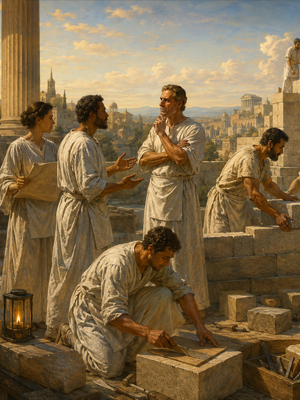 Tolerance requires another virtue: courage. Courage enables us to confront loud, dissenting voices without silencing them. It challenges us to embrace the discomfort of disagreement, recognizing that growth often emerges from tension and opposing views. Instead of seeking to overpower or exclude dissent, we strive to reweave these voices into the collective fabric, fostering growth, understanding, and harmony rather than decay. This act of reweaving requires patience, empathy, and the willingness to engage with ideas that test our convictions. Courage also involves standing firm in the face of resistance, knowing that true progress is rarely easy or comfortable. This principle applies not only to Freemasonry but to any organization dedicated to the betterment of its members and society. By cultivating both courage and tolerance, we create spaces where innovation and transformation can thrive, ensuring that no voice is left unheard and no perspective dismissed without consideration.
At its heart, civic virtue resonates with the esoteric ideals of Freemasonry. It calls us to recognize the divine spark within every individual and the collective soul of humanity. When we act with civic virtue, we align ourselves with the universal principles of harmony, balance, and unity.
Consider these words by Marcus Aurelius: “What is not good for the beehive cannot be good for the bees.” This sentiment encapsulates the essence of civic virtue. Our actions within the community reflect our understanding of the interconnectedness of all beings.
Another illuminating quote comes from Albert Pike: “What we have done for ourselves alone dies with us; what we have done for others and the world remains and is immortal.” This immortal work—the building of a virtuous and harmonious society—is the legacy of Freemasonry.
Civic virtue is not merely a societal construct but an expression of higher principles that guide humanity toward its divine potential. Freemasonry’s emphasis on tolerance, courage, and the collective good exemplifies this ideal. By embodying civic virtue, Freemasons and all who aspire to its ideals contribute to the evolution of both their communities and the world
More Masonic Articles
Explore articles and essays written by Freemasons about Freemasonry.
Read More
Membership
Interested in becoming a member of the worlds oldest Fraternal organization?
Read More
